Resident: Roberts
Date:3/19/10
Author: Jane Desforges
Journal: Currrent concepts
Volume:326 No. 5
pages: 319-323
Sinusitis in Children: Define the condition and management strategies.
The condition:
Upper respiratory tract infections are the most common clinical problem encountered by primary care doctors. It has been estimated that between 5 and 10 percent of upper respiratory tract infections in early childhood are complicated by acute sinusitis. The maxillary, anterior ethmoidal, and frontal sinuses drain into the middle meatus, wheras the posterior ethmoidal and sphenoidal sinuses drain into the superior meatus. The lacrimal duct drains into the inferior meatus. The maxillary sinus has an awkward position which impedes gravitational drainage and predisposes patients to viral upper respiratory infections. The ethmoidal sinus has a number of small air cells separated by thin layer of bone which serves as a conduit into the enthomoidal sinus. If the mucosal lining is inflamed even a little by a viral respiratory infection, then an obstruction is likely. The sphenoidal and frontal sinisuses are not commonly associated with isolated obstructions but rather involved with episodes of parasinusitis. In order to maintain normal physiologic functioning of the sinuses one must have: patency of the ostia, functioning of the ciliary apparatus, and good quality of the secretions.
Management:
Persistant symptoms that last more than 10 but do not show signs of improving in less than 30 days are signs of acute sinusitis. The nasal discharge may be of any quality(thick, thin, clear, mucoid), cough present during the day and worse at night. The child may present with bad breath. The child may have a evident upper respiratory infection. The most common pathogen is strep. Pneumoniae, which accounts for 30 to 40 percent of all cases. H. influenza are similar and account for 20 percent of cases. Antimicrobial agents are the most comprehensive coverage for children with acute sinusitis. Amoxicillin, erythromycin, and cefuroximine are common choices. Sinus aspiration can be done but only in cases that do not respond to multiple courses of antibiotics.
Assesment: Interesting article
Showing posts with label 3/19/10. Show all posts
Showing posts with label 3/19/10. Show all posts
Friday, March 19, 2010

Thursday, March 18, 2010
Physical Appearances of Children 3/19/10
Physical Appearances of Children
Head and Neck Features
Frontal Bossing
-Acromegaly
-Basal cell nevus syndrome
-Congenital syphilis
-Cleidocranial dysostosis
-Crouzon syndrome
-Hurler syndrome
-Pfeiffer syndrome
-Rubinstein-Taybi syndrome
-Russell-Silver syndrome (Russell-Silver dwarf)

Mutliple Frenae
-Orofacial digital Syn
-Thurston Syn
Hypertelorism
-Crouzon syndrome
-Apert syndrome
-Pfeiffer syndrome
-Saethre-Chotzen syndrome
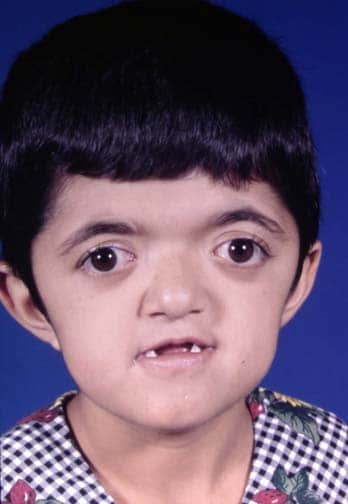
Bifid Uvula,Tongue
-Associated with submucosa cleft
- Loey's Dietz Syndrome (LDS) and can involve some congenital heart problems, particularly aortic aneuyrsm

Flat Filtrum
-Fetal alcohol Syndrome
-Downs
-Hajdu-Cheney Syndrome
-cri du chat

Hair Color/Texture
http://dermatlas.med.jhmi.edu/derm/result.cfm?Diagnosis=-612507952
Cafe Au Lait Spots
- neurofibromatosis
-McCune-Albright syndrome.
-Von Hippel – Lindau disease
-Fanconi anemia
-Tuberous sclerosis
-Silver-Russell dwarfism
-Ataxia telangiectasia
-Bloom syndrome
-Basal cell nevus syndrome
-Gaucher disease
-Chédiak-Higashi syndrome
-Hunter syndrome
-Marfan's syndrome
-Maffucci syndrome
-McCune-Albright syndrome
-Peutz-Jeghers syndrome
-Multiple endocrine neoplasia type 2

Hemangiomas
-vascular formations
-Kasabach-Merritt syndrome


Digits and Extremities
Clubbing
-Chronic lung conditions
-Bronchiectasis
-Cystic fibrosis
-Lung abscess
-Lung cancer
-Pulmonary fibrosis
-Congenital heart disease (cyanotic type)
-Tetralogy of Fallot
-Total anomalous venous return
-Transposition of the great vessels
-Tricuspid atresia
-Truncus arteriosus
-Digestive system diseases
-Celiac disease
-Cirrhosis
-Crohn's disease and ulcerative colitis
-Graves disease or hyperthyroidism
-Dysentery
-Other types of cancer, including liver, gastrointestinal, Hodgkin's lymphoma
-Subacute endocarditis
-Tuberculosis of the intestines

Pitting Edema
-Acute glomerulonephritis
-Burns, including sunburn
-Chronic kidney disease
-Heart failure
-Liver failure from cirrhosis
-Nephrotic syndrome
-Poor nutrition
-Pregnancy
-Thyroid disease
-Too little albumin in the blood (hypoalbuminemia)
-Too much salt or sodium
Use of certain drugs, including
-Androgenic and anabolic steroids
-Calcium channel blockers
-Certain blood pressure medicines
-Corticosteroids such as prednisone
-Diabetes medicines called thiazolidinediones
-Estrogen
-Nonsteroidal anti-inflammatory drugs (NSAIDs)

Hyperkeratosis
-Hyperkeratosis is thickening of the stratum corneum, often associated with a qualitative abnormality of the keratin. Can be caused by Vit. A Def.
-Sacrlet fever
-Actinic keratosis

Polydactyly
-Dandy-Walker syndrome
-Pfieffer syndrome
-Familial polydactyly
-Carpenter syndrome
-Trisomy chromosome 13
-Short rib polydactyly syndrome
-Ellis-van Creveld syndrome
-Michel-Gruber syndrome
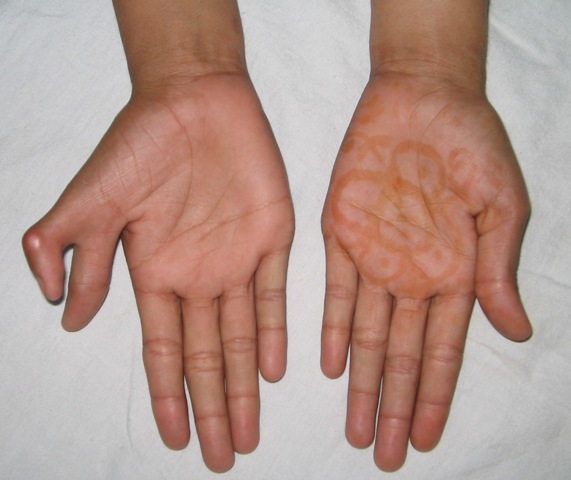

SYndactyly
- Acrosyndactyly;
- Delta Phalanx;
- Poland's syndrome:
- hypoplasia of hand and simple syndactyly of fingers on the same
side as the absent pectoral muscles (and other chest wall muscles);
- Apert's Syndrome:
- when all digits are joined, as is common in spoon hand of Apert's
syndrome (acrocephalosyndactyly), it is important to release
border digits-thumb and small finger-first;
- remaining 3 joined fingers can be managed by removing middle digit,
thus creating a three-fingered hand with a thumb and sufficient
skin for closure;
- Chromosomal Syndromes:
- trisomy of 13, 18, or 21;
- deletion of short arm of chromsome 5;
- Craniofacial Syndromes:
- Aglossia adactylia
- Mobius Syndrome
- Oculomandibulofacial syndrome

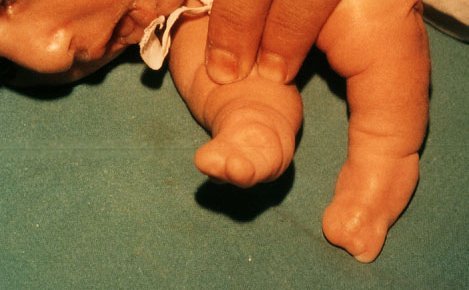
Head and Neck Features
Frontal Bossing
-Acromegaly
-Basal cell nevus syndrome
-Congenital syphilis
-Cleidocranial dysostosis
-Crouzon syndrome
-Hurler syndrome
-Pfeiffer syndrome
-Rubinstein-Taybi syndrome
-Russell-Silver syndrome (Russell-Silver dwarf)
Mutliple Frenae
-Orofacial digital Syn
-Thurston Syn
Hypertelorism
-Crouzon syndrome
-Apert syndrome
-Pfeiffer syndrome
-Saethre-Chotzen syndrome
Bifid Uvula,Tongue
-Associated with submucosa cleft
- Loey's Dietz Syndrome (LDS) and can involve some congenital heart problems, particularly aortic aneuyrsm
Flat Filtrum
-Fetal alcohol Syndrome
-Downs
-Hajdu-Cheney Syndrome
-cri du chat
Hair Color/Texture
http://dermatlas.med.jhmi.edu/derm/result.cfm?Diagnosis=-612507952
Cafe Au Lait Spots
- neurofibromatosis
-McCune-Albright syndrome.
-Von Hippel – Lindau disease
-Fanconi anemia
-Tuberous sclerosis
-Silver-Russell dwarfism
-Ataxia telangiectasia
-Bloom syndrome
-Basal cell nevus syndrome
-Gaucher disease
-Chédiak-Higashi syndrome
-Hunter syndrome
-Marfan's syndrome
-Maffucci syndrome
-McCune-Albright syndrome
-Peutz-Jeghers syndrome
-Multiple endocrine neoplasia type 2
Hemangiomas
-vascular formations
-Kasabach-Merritt syndrome
Digits and Extremities
Clubbing
-Chronic lung conditions
-Bronchiectasis
-Cystic fibrosis
-Lung abscess
-Lung cancer
-Pulmonary fibrosis
-Congenital heart disease (cyanotic type)
-Tetralogy of Fallot
-Total anomalous venous return
-Transposition of the great vessels
-Tricuspid atresia
-Truncus arteriosus
-Digestive system diseases
-Celiac disease
-Cirrhosis
-Crohn's disease and ulcerative colitis
-Graves disease or hyperthyroidism
-Dysentery
-Other types of cancer, including liver, gastrointestinal, Hodgkin's lymphoma
-Subacute endocarditis
-Tuberculosis of the intestines
Pitting Edema
-Acute glomerulonephritis
-Burns, including sunburn
-Chronic kidney disease
-Heart failure
-Liver failure from cirrhosis
-Nephrotic syndrome
-Poor nutrition
-Pregnancy
-Thyroid disease
-Too little albumin in the blood (hypoalbuminemia)
-Too much salt or sodium
Use of certain drugs, including
-Androgenic and anabolic steroids
-Calcium channel blockers
-Certain blood pressure medicines
-Corticosteroids such as prednisone
-Diabetes medicines called thiazolidinediones
-Estrogen
-Nonsteroidal anti-inflammatory drugs (NSAIDs)
Hyperkeratosis
-Hyperkeratosis is thickening of the stratum corneum, often associated with a qualitative abnormality of the keratin. Can be caused by Vit. A Def.
-Sacrlet fever
-Actinic keratosis
Polydactyly
-Dandy-Walker syndrome
-Pfieffer syndrome
-Familial polydactyly
-Carpenter syndrome
-Trisomy chromosome 13
-Short rib polydactyly syndrome
-Ellis-van Creveld syndrome
-Michel-Gruber syndrome
SYndactyly
- Acrosyndactyly;
- Delta Phalanx;
- Poland's syndrome:
- hypoplasia of hand and simple syndactyly of fingers on the same
side as the absent pectoral muscles (and other chest wall muscles);
- Apert's Syndrome:
- when all digits are joined, as is common in spoon hand of Apert's
syndrome (acrocephalosyndactyly), it is important to release
border digits-thumb and small finger-first;
- remaining 3 joined fingers can be managed by removing middle digit,
thus creating a three-fingered hand with a thumb and sufficient
skin for closure;
- Chromosomal Syndromes:
- trisomy of 13, 18, or 21;
- deletion of short arm of chromsome 5;
- Craniofacial Syndromes:
- Aglossia adactylia
- Mobius Syndrome
- Oculomandibulofacial syndrome
Subscribe to:
Posts (Atom)