Resident: Roberts
Date: 4/2/10
Article title: Adverse events and outcomes of conscious sedation for pediatric patients; study of an oral sedation regimen
Author: Leelataweedwud, pattarawadee, et al.
Journal: Jada
Volume: 132 month: November
Year: 2001
Method and Materials:
In a five year retrospective study, the authors examined 195 records of conscious sedation performed in 111 healthy children aged 24 months to 48 months. The author analyzed age, sex, weight, methods of drug delivery, waiting time after administration, adverse events, and sedation outcomes. The sedation regimen used was a cocktail of chloral hydrate (50mg/kg), meperidine (1.5mg/kg), hydroxizine pamoate (25mg) and supplemental oxygen.
Results: All of the following categories were compared in a table to satisfactory sedations, unsatisfactory sedations, and aborted cases to find any correlations if possible. Satisfactory defined as treatment completed without difficulty. Unsatisfactory defined as completed with difficulty or treatment not completed – due to disruptive behavior. Aborted – not attempted.
Age S: 24-80 months ( avg. 48mo w/sd of 13), U: 27 - 66 months (avg. 44 +-11),
A: 33-84 months (avg. 46+- 15)
Sex S: (M -77 F - 64), U: (M-21 F-23), A: (M-2 F-8)
Weight in kg S: 11-34 (avg. 17 +-3), U: 10 – 20 (avg16+-2), A: 10-23 (avg16+-3)
methods of drug delivery according to pt compliance
- all meds drunk 174/195 S: 131 (75%), U: 36 (21%), A: 7 (4%)
- meds delivered by syringe 21/195 S: 10 (48%), U: 8 (38%), A: 3 (14%)
waiting time after administration in min. S: 30 – 115 (avg. 61+-11), U: 30-75 (avg. 58+-11),
A: 35-65 (avg. 49+-12)
treatment time duration in min. S: 65+-22, U: 64+-24, A: N/A
adverse events S: 6 (100%), U: 0 (0%), A: 0 (0%)
apnea - defined as no visual signs of breathing, no audible signs from a precordial stethoscope Out of the 195 cases reviewed, only one case was recorded.
vomiting – defined as vomiting after the administration of the drug and before discharge requirements are met. Only 1 case incident was recorded in the study
desaturation – defined as an Spo2 reading from a pulse oximeter that fell below below95% while the patient was quiet and still. Only one incident was recorded.
prolonged sedation – defined as prolonged sedation time after all dental treatment is finished in which more than 30 minutes or more of recovery time is necessary to achieve discharge criteria recommended by the AAPD’s guidelines. A total of 3 incidents were found.
Conclusions
The described regimen of Chloral hydrate, meperidine, hydroxizine, and supplemental oxygen yielded a 72% overall success rate, while 23 percent of cases were unsuccessful, and 5 percent were aborted. Compliance with taking the full amount of oral sedation and waiting time prior to treatment (of around 60 min) were the most important factors for predicting success. Age, sex, and duration of treatment seamed to be less reliable predictors for success. Only 3% of cases resulted in adverse events occurring.
Assessment: I thought the author did a great job of reviewing the history of OCS cases performed. Though the conclusion was simple and precise he also had a lot of good information covered throughout his article pertaining to these drugs and this regimen. So for those of you that are interested in reading more, I would say go for it.
Tuesday, March 30, 2010

Monday, March 29, 2010
Upper airway obstruction during midazolam/nitrous oxide sedation in children with enlarged tonsils
Dan Boboia 4/2/10 Lit. Review
Title: Upper airway obstruction during midazolam/nitrous oxide sedation in children with enlarged tonsils
Author: Litman et al
Main Purpose: To examine the incidence and severity of upper airway obstruction in children with enlarged tonsils during the inhalation of 50% N2O after premed. with oral versed.
Methods:
25 children presenting for tonsillectomy were used as the study population and 25 children presenting for other types of elective surgery were used as control. Following premed with Versed (0.5mg/kg) measurements were collected during a 3-minute control period followed by 3 min. of breathing 50% N2O with 50% O2. An anesthesiologist held a mask over the child’s mouth and nose without supporting the head and neck or attempting to maintain airway patency. Every 20 seconds the airway patency was graded as none, partial, or complete based on clinical signs and capnography. Clinical signs included chest rise, stridor, and feeling movement of the ventilation bag.
Results:
During 50% N2O inhalation 14 children in the tonsillectomy group and four in the control group demonstrated upper airway obstruction (UAO). One child in the tonsillectomy group developed hypoxemia (SpO2 = 72%). One child in the tonsil group developed complete UAO (50%).
Conclusion:
Children who receive sedation with oral Versed and 50% N2O may exhibit significant UAO, especially in the presence of enlarged tonsils. Presedation physical exams should evaluate the presence of tonsil size during examination of the mouth and airway.
Title: Upper airway obstruction during midazolam/nitrous oxide sedation in children with enlarged tonsils
Author: Litman et al
Main Purpose: To examine the incidence and severity of upper airway obstruction in children with enlarged tonsils during the inhalation of 50% N2O after premed. with oral versed.
Methods:
25 children presenting for tonsillectomy were used as the study population and 25 children presenting for other types of elective surgery were used as control. Following premed with Versed (0.5mg/kg) measurements were collected during a 3-minute control period followed by 3 min. of breathing 50% N2O with 50% O2. An anesthesiologist held a mask over the child’s mouth and nose without supporting the head and neck or attempting to maintain airway patency. Every 20 seconds the airway patency was graded as none, partial, or complete based on clinical signs and capnography. Clinical signs included chest rise, stridor, and feeling movement of the ventilation bag.
Results:
During 50% N2O inhalation 14 children in the tonsillectomy group and four in the control group demonstrated upper airway obstruction (UAO). One child in the tonsillectomy group developed hypoxemia (SpO2 = 72%). One child in the tonsil group developed complete UAO (50%).
Conclusion:
Children who receive sedation with oral Versed and 50% N2O may exhibit significant UAO, especially in the presence of enlarged tonsils. Presedation physical exams should evaluate the presence of tonsil size during examination of the mouth and airway.
Thursday, March 25, 2010
Prevention and Treatment of Overweight in Children and Adolescents
Resident: Roberts
Date: Mar 26, 2010
Article title: Prevention and Treatment of Overweight in Children and Adolescents
Journal: American Family Physician
Volume: 69, number 11 pages: 2591-2598
Year : 2004
Discussion:
Recent studies suggest that 15 percent of children/adolescents in America are at risk for being overweight and 15 percent of them are. The status for being “at risk for being overweight” is correlated with the BMI, this is given to patients when their BMI is between the 85th and 95th percentile. A child that is overweight must have a BMI that is above the 95 percentile. A number of studies have shown that adolescent obesity can lead to an increased mortaility, morbidity and have an effect on social and economic welfare in adulthood. The effectiveness on weight loss interventionin adolescents is not well studied or understood. However, most intervention programs attempt to apply a combination of four treatment strategies which are: 1) Caloric restriction, 2) lifestyle exercise, 3) Decrease in sedentary behavior, 4) pharmateuticals (only in severe cases). Physicians should monitor BMI for all adolescent patients and deliver treatment strategies when individual problems have been identified. There are 3 ways to manage these case scenarios.
· BMI is less than 85 percentile: pt is not overweight and physician should reinforce healthy behaviors and monitor BMI periodically
· BMI is between 85 – 94 percentile: pt is at risk for obesity and physician should initiate weight maintenance strategies until pt can outgrow “at risk status.” Weight loss program may be initiated if necessary as well.
· BMI is above 94 percentile: pt is overweight and weight loss program should be initiated
Patients who are at risk/ or overweight shouldhave support from educated family, friends, doctors and nutritionist when possible and follow up appts should be conducted until goals are met.
Assessment: As pediatric dentists, our role should be identifying unhealthy eating habits and encouraging patients to change centain behaviors thus aiding in this process.
Date: Mar 26, 2010
Article title: Prevention and Treatment of Overweight in Children and Adolescents
Journal: American Family Physician
Volume: 69, number 11 pages: 2591-2598
Year : 2004
Discussion:
Recent studies suggest that 15 percent of children/adolescents in America are at risk for being overweight and 15 percent of them are. The status for being “at risk for being overweight” is correlated with the BMI, this is given to patients when their BMI is between the 85th and 95th percentile. A child that is overweight must have a BMI that is above the 95 percentile. A number of studies have shown that adolescent obesity can lead to an increased mortaility, morbidity and have an effect on social and economic welfare in adulthood. The effectiveness on weight loss interventionin adolescents is not well studied or understood. However, most intervention programs attempt to apply a combination of four treatment strategies which are: 1) Caloric restriction, 2) lifestyle exercise, 3) Decrease in sedentary behavior, 4) pharmateuticals (only in severe cases). Physicians should monitor BMI for all adolescent patients and deliver treatment strategies when individual problems have been identified. There are 3 ways to manage these case scenarios.
· BMI is less than 85 percentile: pt is not overweight and physician should reinforce healthy behaviors and monitor BMI periodically
· BMI is between 85 – 94 percentile: pt is at risk for obesity and physician should initiate weight maintenance strategies until pt can outgrow “at risk status.” Weight loss program may be initiated if necessary as well.
· BMI is above 94 percentile: pt is overweight and weight loss program should be initiated
Patients who are at risk/ or overweight shouldhave support from educated family, friends, doctors and nutritionist when possible and follow up appts should be conducted until goals are met.
Assessment: As pediatric dentists, our role should be identifying unhealthy eating habits and encouraging patients to change centain behaviors thus aiding in this process.
GERD
Resident: Adam J. Bottrill
Date: 26MAR10
Region: Providence
Article title: GERD
Major topic: GERD
Minor topic(s): Erosion
Key points:
1. Define GERD. Chronic symptoms or mucosal damage produced by the abnormal reflux in the esophagus. This is commonly due to transient or permanent changes in the barrier between the esophagus and the stomach. This can be due to incompetence of the lower esophageal sphincter, transient lower esophageal sphincter relaxation, impaired expulsion of gastric reflux from the esophagus, or a hiatal hernia. Respiratory and laryngeal manifestations of GERD are commonly referred to as extra esophageal reflux disease (EERD).
A. GERD may be difficult to detect in infants and children. Symptoms may vary from typical adult symptoms. GERD in children may cause repeated vomiting, effortless spitting up, coughing, and other respiratory problems. Inconsolable crying, failure to gain adequate weight, refusing food, bad breath, and belching or burping are also common. Children may have one symptom or many — no single symptom is universal in all children with GERD.
B. Common symptoms of Pediatric Reflux
* Irritability and pain, sometimes screaming suddenly when asleep. Constant or sudden crying or “colic” like symptoms. Babies can be inconsolable especially when laid down flat.
* Poor sleep habits typically with arching their necks and back during or after feeding
* Excessive possetting or vomiting
* Frequent burping or frequent hiccups
* Excessive dribbling or running nose
* Swallowing problems, gagging and choking
* Frequent ear infections or sinus congestion
* Babies are often very gassy and extremely difficult to “burp” after feeds
* Refusing feeds or frequent feeds for comfort
* Night time coughing, extreme cases of acid reflux can cause apnea and respiratory problems such as asthma, bronchitis and pneumonia if stomach contents are inhaled.
* Bad breath – smelling acidy
* Rancid/acid smelling diapers with loose stool. Bowel movements can be very frequent or babies can be constipated.
2. How does GERD effect the dentition? GERD can effect the dentition through the process of erosion. Almost ALL children with GERD have dental erosions.
3. Can GERD play a role in ECC? It can, however the surfaces effected by GERD are often different than those effected by ECC… this is a disputed fact.
4. What is the medical management? Dietary modification, positional therapy, weight loss, avoid tight garments, Meds (proton pump inhibitors, H2 receptor blockers, antacids), surgery.
5. What is a Nissen fundoplication (w/ or w/out pyloroplasty)? In a fundoplication, the gastric fundus (upper part) of the stomach is wrapped, or plicated, around the lower end of the esophagus and stitched in place, reinforcing the closing function of the lower esophageal sphincter: Whenever the stomach contracts, it also closes off the esophagus instead of squeezing stomach acids into it. This prevents the reflux of gastric acid (in GERD). The esophageal hiatus is also narrowed down by sutures to prevent or treat concurrent hiatal hernia, in which the fundus slides up through the enlarged esophageal hiatus of the diaphragm. In a Nissen fundoplication, also called a complete fundoplication, the fundus is wrapped all the way 360 degrees around the esophagus. Pyloroplasty, a procedure often accompanying fundoplication, is the term that describes the widening of the pylorus. This procedure assists with gastric emptying.

Assessment: Yay GERD.
Date: 26MAR10
Region: Providence
Article title: GERD
Major topic: GERD
Minor topic(s): Erosion
Key points:
1. Define GERD. Chronic symptoms or mucosal damage produced by the abnormal reflux in the esophagus. This is commonly due to transient or permanent changes in the barrier between the esophagus and the stomach. This can be due to incompetence of the lower esophageal sphincter, transient lower esophageal sphincter relaxation, impaired expulsion of gastric reflux from the esophagus, or a hiatal hernia. Respiratory and laryngeal manifestations of GERD are commonly referred to as extra esophageal reflux disease (EERD).
A. GERD may be difficult to detect in infants and children. Symptoms may vary from typical adult symptoms. GERD in children may cause repeated vomiting, effortless spitting up, coughing, and other respiratory problems. Inconsolable crying, failure to gain adequate weight, refusing food, bad breath, and belching or burping are also common. Children may have one symptom or many — no single symptom is universal in all children with GERD.
B. Common symptoms of Pediatric Reflux
* Irritability and pain, sometimes screaming suddenly when asleep. Constant or sudden crying or “colic” like symptoms. Babies can be inconsolable especially when laid down flat.
* Poor sleep habits typically with arching their necks and back during or after feeding
* Excessive possetting or vomiting
* Frequent burping or frequent hiccups
* Excessive dribbling or running nose
* Swallowing problems, gagging and choking
* Frequent ear infections or sinus congestion
* Babies are often very gassy and extremely difficult to “burp” after feeds
* Refusing feeds or frequent feeds for comfort
* Night time coughing, extreme cases of acid reflux can cause apnea and respiratory problems such as asthma, bronchitis and pneumonia if stomach contents are inhaled.
* Bad breath – smelling acidy
* Rancid/acid smelling diapers with loose stool. Bowel movements can be very frequent or babies can be constipated.
2. How does GERD effect the dentition? GERD can effect the dentition through the process of erosion. Almost ALL children with GERD have dental erosions.
3. Can GERD play a role in ECC? It can, however the surfaces effected by GERD are often different than those effected by ECC… this is a disputed fact.
4. What is the medical management? Dietary modification, positional therapy, weight loss, avoid tight garments, Meds (proton pump inhibitors, H2 receptor blockers, antacids), surgery.
5. What is a Nissen fundoplication (w/ or w/out pyloroplasty)? In a fundoplication, the gastric fundus (upper part) of the stomach is wrapped, or plicated, around the lower end of the esophagus and stitched in place, reinforcing the closing function of the lower esophageal sphincter: Whenever the stomach contracts, it also closes off the esophagus instead of squeezing stomach acids into it. This prevents the reflux of gastric acid (in GERD). The esophageal hiatus is also narrowed down by sutures to prevent or treat concurrent hiatal hernia, in which the fundus slides up through the enlarged esophageal hiatus of the diaphragm. In a Nissen fundoplication, also called a complete fundoplication, the fundus is wrapped all the way 360 degrees around the esophagus. Pyloroplasty, a procedure often accompanying fundoplication, is the term that describes the widening of the pylorus. This procedure assists with gastric emptying.

Assessment: Yay GERD.
Dental Management of Children with Asthma
Title: Dental management of children with asthma
Authors: Jian Fu Zhu DDS, Humberto Hidalgo MD MS, Corbett Holmgren DDS MD
Journal: Pediatric Dentistry 18:5 1996
Summary: Asthma is a chronic airway disease characterized by both inflammation and broncho-constriction due to genetic and environmental factors. It affects approximately 5-10% of children and is the leading cause of pediatric hospitalization in the US. Symptoms of asthma include coughing, wheezing, chest tightness and dyspnea. Tachypnea, tachycardia, diaphoresis and labored breathing can occur when the bronchial constriction is more severe. Asthma is broken down into mild (wheezing fewer than 2 days per week, no nocturnal symptoms and relatively good exercise tolerance), moderate (wheezing 2-5 days per week with nocturnal symptoms and poor exercise tolerance) and severe (daily wheezing, exercise intolerance and frequent nocturnal symptoms. Bronchocontstriction is mainly due to a hyper-responsive bronchus in the presence of triggering agents due to normal inflammation.
The most common cause of asthma attack is allergen exposures, viral or mycoplasma respiratory tract infections, nonspecific airway irritants, tapering of medication and exercise particularly in cold weather. More severe asthma is found in children of parents who smoke. Emotional and psychological stress may also bring on attacks. Aspirin and other beta adrenergic blockers may precipitate attacks, epinephrine may be used for these.
The two main types of drugs used to combat asthma are anti inflammatory drugs and bronchodilators. Mild asthma is usually controlled with only a beta receptor agonist such as albuterol or terbutaline (typically 2 puffs every 4-6 hours prn symptoms). Cromolyn sodium and nedocromil sodium are anti inflammatory agents that prevent mast cell release of mediators and are used in moderate cases, but have little effect against acute attacks. Inhaled corticosteroids are effective anti-inflammatories recommended for use in children with moderate to severe asthma. Systemic prednisone is also considered for those with acute severe asthma.
Asthma attacks should be considered as a medical emergency whose initial treatment is typically with albuterol, either from an inhaler or a nebulizer once the dental treatment has been discontinued. Keep the airway open and administer oxygen. If there is no improvement or the patient is worsening, administer epinephrine and summon medical assistance
There is evidence of a link between asthma and increased caries incidence, likely due to the 20% decrease in whole and 35% in parotid saliva due to beta agonist effects. Decreased nasorespiratory function can lead to mouth breathing which has been linked to narrower and higher palates, greater facial heights and increased risk of posterior crossbite. Inhaled steroid therapy has been associated with adrenal suppression, dysphonia, dryness of mouth, oropharyngeal candidiasis and rarely, tongue enlargement.
Asthmatics have a higher correlation with psychological problems. High dose prednisone therapy may result in anxiety or depression. Inhaled albuterol has also ben linked to hand tremors. Parents of asthmatic children tend to have a higher anxiety level than parents of healthy children.
When treating an asthmatic patient, the dentist can estimate how well the disease is controlled by asking: the frequency of attakcs, type of medication used chronically and for acute attacks and the length of time the child was last seen emergently due to asthma. A wheezing or poorly controlled patient should be reappointed, and inhalant bronchodilators should be brought to every appointment. Hydroxyzine is antihistaminic and benzodiazepines which are anxiolytic are recommended as agents of conscious sedation. Barbiturates and narcotics should be avoided in children with asthma because they may stimulate histamine release. Nitrous oxide use in children with mild to moderate asthma can help prevent acute attacks, but should be avoided in children with severe asthma since it can be an airway irritant. Ketamine is safe for asthmatic patients but may pose problems for children with cardiopulmonary problems. When possible, children with asthma should be treated with pulse oximetry, EKG and BP cuff present, with intubation materials available.
Patients taking theophylline should not receive erythromycin and it has been recommended to not use LA with vasocontrictors due to its beta agonist nature and the presence of meta bisulfites which may be highly allergic. Asthmatic children are three times more likely to have post operative complications than healthy children. Children who have been on daily or alternate day glucocrticoid therapy may become adrenally suppressed during treatment and should receive double their normal dose the day of treatment. These are patients who have had 4 or more 4-5+ day courses or a continuous 10-14 day course of systemic GC for acute asthma within the previous year and those who have taken systemic GC within the last 30 days. It has been recommended that these patients take 60mg hydrocortisone 6-8 hours before and 1 hour before, although this is not agreed upon.
Authors: Jian Fu Zhu DDS, Humberto Hidalgo MD MS, Corbett Holmgren DDS MD
Journal: Pediatric Dentistry 18:5 1996
Summary: Asthma is a chronic airway disease characterized by both inflammation and broncho-constriction due to genetic and environmental factors. It affects approximately 5-10% of children and is the leading cause of pediatric hospitalization in the US. Symptoms of asthma include coughing, wheezing, chest tightness and dyspnea. Tachypnea, tachycardia, diaphoresis and labored breathing can occur when the bronchial constriction is more severe. Asthma is broken down into mild (wheezing fewer than 2 days per week, no nocturnal symptoms and relatively good exercise tolerance), moderate (wheezing 2-5 days per week with nocturnal symptoms and poor exercise tolerance) and severe (daily wheezing, exercise intolerance and frequent nocturnal symptoms. Bronchocontstriction is mainly due to a hyper-responsive bronchus in the presence of triggering agents due to normal inflammation.
The most common cause of asthma attack is allergen exposures, viral or mycoplasma respiratory tract infections, nonspecific airway irritants, tapering of medication and exercise particularly in cold weather. More severe asthma is found in children of parents who smoke. Emotional and psychological stress may also bring on attacks. Aspirin and other beta adrenergic blockers may precipitate attacks, epinephrine may be used for these.
The two main types of drugs used to combat asthma are anti inflammatory drugs and bronchodilators. Mild asthma is usually controlled with only a beta receptor agonist such as albuterol or terbutaline (typically 2 puffs every 4-6 hours prn symptoms). Cromolyn sodium and nedocromil sodium are anti inflammatory agents that prevent mast cell release of mediators and are used in moderate cases, but have little effect against acute attacks. Inhaled corticosteroids are effective anti-inflammatories recommended for use in children with moderate to severe asthma. Systemic prednisone is also considered for those with acute severe asthma.
Asthma attacks should be considered as a medical emergency whose initial treatment is typically with albuterol, either from an inhaler or a nebulizer once the dental treatment has been discontinued. Keep the airway open and administer oxygen. If there is no improvement or the patient is worsening, administer epinephrine and summon medical assistance
There is evidence of a link between asthma and increased caries incidence, likely due to the 20% decrease in whole and 35% in parotid saliva due to beta agonist effects. Decreased nasorespiratory function can lead to mouth breathing which has been linked to narrower and higher palates, greater facial heights and increased risk of posterior crossbite. Inhaled steroid therapy has been associated with adrenal suppression, dysphonia, dryness of mouth, oropharyngeal candidiasis and rarely, tongue enlargement.
Asthmatics have a higher correlation with psychological problems. High dose prednisone therapy may result in anxiety or depression. Inhaled albuterol has also ben linked to hand tremors. Parents of asthmatic children tend to have a higher anxiety level than parents of healthy children.
When treating an asthmatic patient, the dentist can estimate how well the disease is controlled by asking: the frequency of attakcs, type of medication used chronically and for acute attacks and the length of time the child was last seen emergently due to asthma. A wheezing or poorly controlled patient should be reappointed, and inhalant bronchodilators should be brought to every appointment. Hydroxyzine is antihistaminic and benzodiazepines which are anxiolytic are recommended as agents of conscious sedation. Barbiturates and narcotics should be avoided in children with asthma because they may stimulate histamine release. Nitrous oxide use in children with mild to moderate asthma can help prevent acute attacks, but should be avoided in children with severe asthma since it can be an airway irritant. Ketamine is safe for asthmatic patients but may pose problems for children with cardiopulmonary problems. When possible, children with asthma should be treated with pulse oximetry, EKG and BP cuff present, with intubation materials available.
Patients taking theophylline should not receive erythromycin and it has been recommended to not use LA with vasocontrictors due to its beta agonist nature and the presence of meta bisulfites which may be highly allergic. Asthmatic children are three times more likely to have post operative complications than healthy children. Children who have been on daily or alternate day glucocrticoid therapy may become adrenally suppressed during treatment and should receive double their normal dose the day of treatment. These are patients who have had 4 or more 4-5+ day courses or a continuous 10-14 day course of systemic GC for acute asthma within the previous year and those who have taken systemic GC within the last 30 days. It has been recommended that these patients take 60mg hydrocortisone 6-8 hours before and 1 hour before, although this is not agreed upon.
Friday, March 19, 2010
Medical history
Medical History
From the Handbook, it should have:
- allergies
- adverse drug reactions
- immunizations
- current meds with dosages
- recurrent headaches
- congenital birth defects
- seizures
- developmental delays
- behavioral/learning problems
- hx of blood transfusions
- hx of abnormal bleeding
- problems with
o heart
o kidney
o liver/GI
o endocrine system
o breathing/lungs
o hearing
o vision
- history of
o cancers, tumors, blood dyscrasias
o hospitalizations, surgeries, injuries
o bacterial/viral infections (???)
o name/address of physician
o date of last physical exam
o substance abuse
o STD
o Pregnancy
o Any other issues?
- Family/social history
Should be consulted and updated at every visit. A new signed med hx should be obtained at every recall visit.
Needs to be signed and dated by legal guardian, and signed by person reviewing.
Sinusitis in Children: Define the condition and management strategies.
Resident: Roberts
Date:3/19/10
Author: Jane Desforges
Journal: Currrent concepts
Volume:326 No. 5
pages: 319-323
Sinusitis in Children: Define the condition and management strategies.
The condition:
Upper respiratory tract infections are the most common clinical problem encountered by primary care doctors. It has been estimated that between 5 and 10 percent of upper respiratory tract infections in early childhood are complicated by acute sinusitis. The maxillary, anterior ethmoidal, and frontal sinuses drain into the middle meatus, wheras the posterior ethmoidal and sphenoidal sinuses drain into the superior meatus. The lacrimal duct drains into the inferior meatus. The maxillary sinus has an awkward position which impedes gravitational drainage and predisposes patients to viral upper respiratory infections. The ethmoidal sinus has a number of small air cells separated by thin layer of bone which serves as a conduit into the enthomoidal sinus. If the mucosal lining is inflamed even a little by a viral respiratory infection, then an obstruction is likely. The sphenoidal and frontal sinisuses are not commonly associated with isolated obstructions but rather involved with episodes of parasinusitis. In order to maintain normal physiologic functioning of the sinuses one must have: patency of the ostia, functioning of the ciliary apparatus, and good quality of the secretions.
Management:
Persistant symptoms that last more than 10 but do not show signs of improving in less than 30 days are signs of acute sinusitis. The nasal discharge may be of any quality(thick, thin, clear, mucoid), cough present during the day and worse at night. The child may present with bad breath. The child may have a evident upper respiratory infection. The most common pathogen is strep. Pneumoniae, which accounts for 30 to 40 percent of all cases. H. influenza are similar and account for 20 percent of cases. Antimicrobial agents are the most comprehensive coverage for children with acute sinusitis. Amoxicillin, erythromycin, and cefuroximine are common choices. Sinus aspiration can be done but only in cases that do not respond to multiple courses of antibiotics.
Assesment: Interesting article
Date:3/19/10
Author: Jane Desforges
Journal: Currrent concepts
Volume:326 No. 5
pages: 319-323
Sinusitis in Children: Define the condition and management strategies.
The condition:
Upper respiratory tract infections are the most common clinical problem encountered by primary care doctors. It has been estimated that between 5 and 10 percent of upper respiratory tract infections in early childhood are complicated by acute sinusitis. The maxillary, anterior ethmoidal, and frontal sinuses drain into the middle meatus, wheras the posterior ethmoidal and sphenoidal sinuses drain into the superior meatus. The lacrimal duct drains into the inferior meatus. The maxillary sinus has an awkward position which impedes gravitational drainage and predisposes patients to viral upper respiratory infections. The ethmoidal sinus has a number of small air cells separated by thin layer of bone which serves as a conduit into the enthomoidal sinus. If the mucosal lining is inflamed even a little by a viral respiratory infection, then an obstruction is likely. The sphenoidal and frontal sinisuses are not commonly associated with isolated obstructions but rather involved with episodes of parasinusitis. In order to maintain normal physiologic functioning of the sinuses one must have: patency of the ostia, functioning of the ciliary apparatus, and good quality of the secretions.
Management:
Persistant symptoms that last more than 10 but do not show signs of improving in less than 30 days are signs of acute sinusitis. The nasal discharge may be of any quality(thick, thin, clear, mucoid), cough present during the day and worse at night. The child may present with bad breath. The child may have a evident upper respiratory infection. The most common pathogen is strep. Pneumoniae, which accounts for 30 to 40 percent of all cases. H. influenza are similar and account for 20 percent of cases. Antimicrobial agents are the most comprehensive coverage for children with acute sinusitis. Amoxicillin, erythromycin, and cefuroximine are common choices. Sinus aspiration can be done but only in cases that do not respond to multiple courses of antibiotics.
Assesment: Interesting article
Thursday, March 18, 2010
Physical Appearances of Children 3/19/10
Physical Appearances of Children
Head and Neck Features
Frontal Bossing
-Acromegaly
-Basal cell nevus syndrome
-Congenital syphilis
-Cleidocranial dysostosis
-Crouzon syndrome
-Hurler syndrome
-Pfeiffer syndrome
-Rubinstein-Taybi syndrome
-Russell-Silver syndrome (Russell-Silver dwarf)

Mutliple Frenae
-Orofacial digital Syn
-Thurston Syn
Hypertelorism
-Crouzon syndrome
-Apert syndrome
-Pfeiffer syndrome
-Saethre-Chotzen syndrome

Bifid Uvula,Tongue
-Associated with submucosa cleft
- Loey's Dietz Syndrome (LDS) and can involve some congenital heart problems, particularly aortic aneuyrsm

Flat Filtrum
-Fetal alcohol Syndrome
-Downs
-Hajdu-Cheney Syndrome
-cri du chat

Hair Color/Texture
http://dermatlas.med.jhmi.edu/derm/result.cfm?Diagnosis=-612507952
Cafe Au Lait Spots
- neurofibromatosis
-McCune-Albright syndrome.
-Von Hippel – Lindau disease
-Fanconi anemia
-Tuberous sclerosis
-Silver-Russell dwarfism
-Ataxia telangiectasia
-Bloom syndrome
-Basal cell nevus syndrome
-Gaucher disease
-Chédiak-Higashi syndrome
-Hunter syndrome
-Marfan's syndrome
-Maffucci syndrome
-McCune-Albright syndrome
-Peutz-Jeghers syndrome
-Multiple endocrine neoplasia type 2

Hemangiomas
-vascular formations
-Kasabach-Merritt syndrome


Digits and Extremities
Clubbing
-Chronic lung conditions
-Bronchiectasis
-Cystic fibrosis
-Lung abscess
-Lung cancer
-Pulmonary fibrosis
-Congenital heart disease (cyanotic type)
-Tetralogy of Fallot
-Total anomalous venous return
-Transposition of the great vessels
-Tricuspid atresia
-Truncus arteriosus
-Digestive system diseases
-Celiac disease
-Cirrhosis
-Crohn's disease and ulcerative colitis
-Graves disease or hyperthyroidism
-Dysentery
-Other types of cancer, including liver, gastrointestinal, Hodgkin's lymphoma
-Subacute endocarditis
-Tuberculosis of the intestines

Pitting Edema
-Acute glomerulonephritis
-Burns, including sunburn
-Chronic kidney disease
-Heart failure
-Liver failure from cirrhosis
-Nephrotic syndrome
-Poor nutrition
-Pregnancy
-Thyroid disease
-Too little albumin in the blood (hypoalbuminemia)
-Too much salt or sodium
Use of certain drugs, including
-Androgenic and anabolic steroids
-Calcium channel blockers
-Certain blood pressure medicines
-Corticosteroids such as prednisone
-Diabetes medicines called thiazolidinediones
-Estrogen
-Nonsteroidal anti-inflammatory drugs (NSAIDs)

Hyperkeratosis
-Hyperkeratosis is thickening of the stratum corneum, often associated with a qualitative abnormality of the keratin. Can be caused by Vit. A Def.
-Sacrlet fever
-Actinic keratosis

Polydactyly
-Dandy-Walker syndrome
-Pfieffer syndrome
-Familial polydactyly
-Carpenter syndrome
-Trisomy chromosome 13
-Short rib polydactyly syndrome
-Ellis-van Creveld syndrome
-Michel-Gruber syndrome


SYndactyly
- Acrosyndactyly;
- Delta Phalanx;
- Poland's syndrome:
- hypoplasia of hand and simple syndactyly of fingers on the same
side as the absent pectoral muscles (and other chest wall muscles);
- Apert's Syndrome:
- when all digits are joined, as is common in spoon hand of Apert's
syndrome (acrocephalosyndactyly), it is important to release
border digits-thumb and small finger-first;
- remaining 3 joined fingers can be managed by removing middle digit,
thus creating a three-fingered hand with a thumb and sufficient
skin for closure;
- Chromosomal Syndromes:
- trisomy of 13, 18, or 21;
- deletion of short arm of chromsome 5;
- Craniofacial Syndromes:
- Aglossia adactylia
- Mobius Syndrome
- Oculomandibulofacial syndrome


Head and Neck Features
Frontal Bossing
-Acromegaly
-Basal cell nevus syndrome
-Congenital syphilis
-Cleidocranial dysostosis
-Crouzon syndrome
-Hurler syndrome
-Pfeiffer syndrome
-Rubinstein-Taybi syndrome
-Russell-Silver syndrome (Russell-Silver dwarf)

Mutliple Frenae
-Orofacial digital Syn
-Thurston Syn
Hypertelorism
-Crouzon syndrome
-Apert syndrome
-Pfeiffer syndrome
-Saethre-Chotzen syndrome
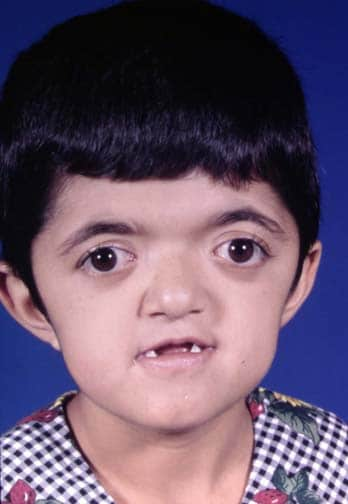
Bifid Uvula,Tongue
-Associated with submucosa cleft
- Loey's Dietz Syndrome (LDS) and can involve some congenital heart problems, particularly aortic aneuyrsm

Flat Filtrum
-Fetal alcohol Syndrome
-Downs
-Hajdu-Cheney Syndrome
-cri du chat

Hair Color/Texture
http://dermatlas.med.jhmi.edu/derm/result.cfm?Diagnosis=-612507952
Cafe Au Lait Spots
- neurofibromatosis
-McCune-Albright syndrome.
-Von Hippel – Lindau disease
-Fanconi anemia
-Tuberous sclerosis
-Silver-Russell dwarfism
-Ataxia telangiectasia
-Bloom syndrome
-Basal cell nevus syndrome
-Gaucher disease
-Chédiak-Higashi syndrome
-Hunter syndrome
-Marfan's syndrome
-Maffucci syndrome
-McCune-Albright syndrome
-Peutz-Jeghers syndrome
-Multiple endocrine neoplasia type 2

Hemangiomas
-vascular formations
-Kasabach-Merritt syndrome


Digits and Extremities
Clubbing
-Chronic lung conditions
-Bronchiectasis
-Cystic fibrosis
-Lung abscess
-Lung cancer
-Pulmonary fibrosis
-Congenital heart disease (cyanotic type)
-Tetralogy of Fallot
-Total anomalous venous return
-Transposition of the great vessels
-Tricuspid atresia
-Truncus arteriosus
-Digestive system diseases
-Celiac disease
-Cirrhosis
-Crohn's disease and ulcerative colitis
-Graves disease or hyperthyroidism
-Dysentery
-Other types of cancer, including liver, gastrointestinal, Hodgkin's lymphoma
-Subacute endocarditis
-Tuberculosis of the intestines

Pitting Edema
-Acute glomerulonephritis
-Burns, including sunburn
-Chronic kidney disease
-Heart failure
-Liver failure from cirrhosis
-Nephrotic syndrome
-Poor nutrition
-Pregnancy
-Thyroid disease
-Too little albumin in the blood (hypoalbuminemia)
-Too much salt or sodium
Use of certain drugs, including
-Androgenic and anabolic steroids
-Calcium channel blockers
-Certain blood pressure medicines
-Corticosteroids such as prednisone
-Diabetes medicines called thiazolidinediones
-Estrogen
-Nonsteroidal anti-inflammatory drugs (NSAIDs)

Hyperkeratosis
-Hyperkeratosis is thickening of the stratum corneum, often associated with a qualitative abnormality of the keratin. Can be caused by Vit. A Def.
-Sacrlet fever
-Actinic keratosis

Polydactyly
-Dandy-Walker syndrome
-Pfieffer syndrome
-Familial polydactyly
-Carpenter syndrome
-Trisomy chromosome 13
-Short rib polydactyly syndrome
-Ellis-van Creveld syndrome
-Michel-Gruber syndrome
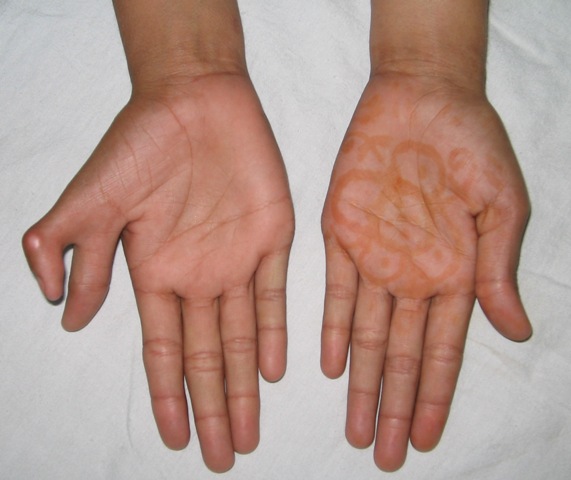

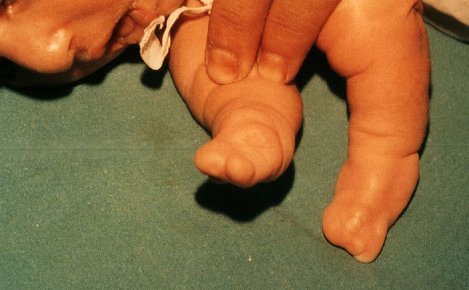
SYndactyly
- Acrosyndactyly;
- Delta Phalanx;
- Poland's syndrome:
- hypoplasia of hand and simple syndactyly of fingers on the same
side as the absent pectoral muscles (and other chest wall muscles);
- Apert's Syndrome:
- when all digits are joined, as is common in spoon hand of Apert's
syndrome (acrocephalosyndactyly), it is important to release
border digits-thumb and small finger-first;
- remaining 3 joined fingers can be managed by removing middle digit,
thus creating a three-fingered hand with a thumb and sufficient
skin for closure;
- Chromosomal Syndromes:
- trisomy of 13, 18, or 21;
- deletion of short arm of chromsome 5;
- Craniofacial Syndromes:
- Aglossia adactylia
- Mobius Syndrome
- Oculomandibulofacial syndrome

03/19/2010 Recognizing and managing the hypertensive child
Resident: Hencler
Date: 03/19/2010
Article title: Recognizing and managing the hypertensive child
Author: Flynn, MD, MS
Year: 2003
Major topic: Hypertension (HT)
Key points in the article discussion:
Awareness of childhood HT among the med community and the general public has increase. As a result, a greater number of children with HT have come to med attention. It is important to know the child’s height percentile b/f determining if BP is normal. Overall, most childhood HT is secondary to an underlying disorder, which in most cases, is renal disease. Today, obesity is a common cause of childhood HT. HT in children can also have a genetic basis although the role of genetic mutations in the pathophysiology of HT remains unknown. To obtain an accurate BP reading the bladder of the cuff should encircle 80%-100% of the circumference of the upper arm and it’s width should be 40%. The child should be seated quietly for at least 5 mins b/f BP reading and the arm should be supported at heart level. Once a child is found to have HP and thorough H & P, med and family hx should be conducted. Look for underlying symptoms of another disorder such as renal disease. B/c many children w/ HT have an otherwise normal physical exam, laboratory testing (full blood work up) is very important. Also assess the presence of hypertensive target-organ damage such as left vent hypertrophy or hypertensive retinopathy. Endocardiogrphy may also be required. Management is multifaceted including a comprehensive approach incorporating patient and family education, nonpharm measures, and anti-HT meds as well as monitoring med side effects and tx response. Encourage wieghtloss through diet modification and exercise. When prescribing anti-HT for children, the “stepped care” approach has been recommended. The dose of the initial agent chosen is increased until either, the BP is controlled, the max dose is reached, or side effects appear, then if BP not controlled a second agent is from a different class is added. Drug choice is up to doctor. Many pediatric authorities recommend against using diuretics as first line agents. The optimal BP goal of tx in a child w/ HT remains unknown. The lack of HT-related endpoints perhaps explains the lack of consensus on tx goals for HT children.
Summary:
Increased awareness of HT in children, coupled with an increase in risk factors for HT such as obesity, means that many more children will be found to have elevated BP.
Careful measurement of BP and evaluation of children with sustained HT should ID those for tx
Although outcome data for childhood HT does not yet exist, there has been a rapid increase in information regarding anti-HT drugs, making children easier to tx.
A combo of pharm and non-pharm measure will result in satisfactory control of childhood HT while allowing quality of life.
Assessment of article:
Useful information and very pertinent to anyone tx children.
Date: 03/19/2010
Article title: Recognizing and managing the hypertensive child
Author: Flynn, MD, MS
Year: 2003
Major topic: Hypertension (HT)
Key points in the article discussion:
Awareness of childhood HT among the med community and the general public has increase. As a result, a greater number of children with HT have come to med attention. It is important to know the child’s height percentile b/f determining if BP is normal. Overall, most childhood HT is secondary to an underlying disorder, which in most cases, is renal disease. Today, obesity is a common cause of childhood HT. HT in children can also have a genetic basis although the role of genetic mutations in the pathophysiology of HT remains unknown. To obtain an accurate BP reading the bladder of the cuff should encircle 80%-100% of the circumference of the upper arm and it’s width should be 40%. The child should be seated quietly for at least 5 mins b/f BP reading and the arm should be supported at heart level. Once a child is found to have HP and thorough H & P, med and family hx should be conducted. Look for underlying symptoms of another disorder such as renal disease. B/c many children w/ HT have an otherwise normal physical exam, laboratory testing (full blood work up) is very important. Also assess the presence of hypertensive target-organ damage such as left vent hypertrophy or hypertensive retinopathy. Endocardiogrphy may also be required. Management is multifaceted including a comprehensive approach incorporating patient and family education, nonpharm measures, and anti-HT meds as well as monitoring med side effects and tx response. Encourage wieghtloss through diet modification and exercise. When prescribing anti-HT for children, the “stepped care” approach has been recommended. The dose of the initial agent chosen is increased until either, the BP is controlled, the max dose is reached, or side effects appear, then if BP not controlled a second agent is from a different class is added. Drug choice is up to doctor. Many pediatric authorities recommend against using diuretics as first line agents. The optimal BP goal of tx in a child w/ HT remains unknown. The lack of HT-related endpoints perhaps explains the lack of consensus on tx goals for HT children.
Summary:
Increased awareness of HT in children, coupled with an increase in risk factors for HT such as obesity, means that many more children will be found to have elevated BP.
Careful measurement of BP and evaluation of children with sustained HT should ID those for tx
Although outcome data for childhood HT does not yet exist, there has been a rapid increase in information regarding anti-HT drugs, making children easier to tx.
A combo of pharm and non-pharm measure will result in satisfactory control of childhood HT while allowing quality of life.
Assessment of article:
Useful information and very pertinent to anyone tx children.
Role of the pediatric dentist in optimization of childhood immunization
Department of Pediatric Dentistry
Lutheran Medical Center
Date: 03/19/2010
Article title: Role of the pediatric dentist in optimization of childhood immunization
Author(s):Hicks, Flaitz
Journal: Pediatric Dentistry
Volume (number): 18:5
Month, Year: 1996
Major topic: Childhood immunization
Lutheran Medical Center
Date: 03/19/2010
Article title: Role of the pediatric dentist in optimization of childhood immunization
Author(s):Hicks, Flaitz
Journal: Pediatric Dentistry
Volume (number): 18:5
Month, Year: 1996
Major topic: Childhood immunization
Minor topics: Role of pediatric dentists beyond just dentistry
Type of Article: informative
Type of Article: informative
Main Purpose: To encourage pediatric dentists to play an active role in assisting children to obtain immunizations.
Overview of method of research: Professional opinion and presentation of statistics derived from other sources.
Overview of method of research: Professional opinion and presentation of statistics derived from other sources.
Findings:
Pediatric detists should keep immunization records of their patients and encourage parents under-immunized children to get immunized. Pediatric dentists can also provide proper referrals to assist in the process. Overall, this could diminish the spread of disease.
Key points/Summary :
Pediatric detists should keep immunization records of their patients and encourage parents under-immunized children to get immunized. Pediatric dentists can also provide proper referrals to assist in the process. Overall, this could diminish the spread of disease.
Key points/Summary :
- Many children are under-immunized.
- Parents often don’t know if their child has been properly immunized.
- Many children obtain immunizations from a variety of sources, making it harder to track.
- Dentists need to determine their own policies for treating under-immunized patients.
Assessment of article: A lot of text to make a very simple point, but this is good to keep in mind.
Scenario 1:
Autistic child whose parents think MMR caused autism and desire no future Immunizations. Does this matter:
If a parent believes that the MMR caused their child’s autism, then you aren’t going to change their mind. I would say “hey, your kid already has autism, so why not at least keep him from getting disease?”
From a public health standpoint it obviously does matter if the kid is immunized, but I personally could see why the parents would choose not to immunize.
Scenario 2:
trauma case with a dirty wound, no recored of a tetanus booster, what do you recommend?
Pt should be referred to PCP for tetanus booster per AAPD trauma guidelines.
Scenario 1:
Autistic child whose parents think MMR caused autism and desire no future Immunizations. Does this matter:
If a parent believes that the MMR caused their child’s autism, then you aren’t going to change their mind. I would say “hey, your kid already has autism, so why not at least keep him from getting disease?”
From a public health standpoint it obviously does matter if the kid is immunized, but I personally could see why the parents would choose not to immunize.
Scenario 2:
trauma case with a dirty wound, no recored of a tetanus booster, what do you recommend?
Pt should be referred to PCP for tetanus booster per AAPD trauma guidelines.
Subscribe to:
Posts (Atom)